

Gender Based Violence
- Home
- Gender Based Violence
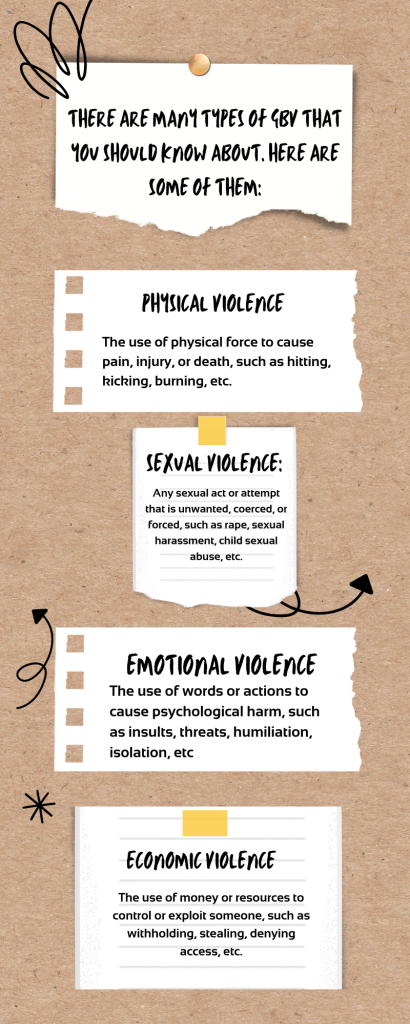
What You Need to Know
GBV is rooted in gender inequality, harmful norms, and discrimination that devalue women and girls. It can also be exacerbated by poverty, conflict, insecurity, and other factors that increase vulnerability and marginalization. GBV has devastating impacts on individuals, families, communities, and societies. It can cause physical, sexual, psychological, and economic harm, as well as increase the risk of HIV/AIDS, unwanted pregnancies, unsafe abortions, maternal mortality, and other health problems. GBV also hinders women’s and girls’ access to education, employment, justice, and participation in decision-making.
GBV can be prevented and responded to through various measures, such as raising awareness, promoting education, enacting laws, policies, and standards, providing services and support for survivors, strengthening institutions and coordination mechanisms, engaging men and boys as allies, and empowering women and girls as agents of change. Some examples of good practices and initiatives in the region that are working to end GBV are: the UN Women’s Spotlight Initiative, which supports comprehensive interventions to eliminate all forms of violence against women and girls; the African Union’s Campaign to End Child Marriage in Africa, which aims to accelerate actions to end child marriage by 2030; and the MenEngage Alliance, which mobilizes men and boys to challenge harmful masculinities and promote gender equality. GBV also hinders women’s and girls’ access to education, employment, justice, and participation in decision-making.